I heard Latt Ulljhi, Sulljha Ja Baalam in Music World the other day and I asked the shop keeper what album was that song from and who was the singer, and he said that's from Yuvvraaj, and without thinking twice I bought the Music C.D. That was the effect of Vijay Prakash's voice. The song is in Abheri or Bhimpalasi in Hindustani. He's sung the song so beautifully, that it was probably the first time that I bought an A.R.Rahman's album for the voice of the singer and not for A.R.Rahman! Surprising isn't it?
Vijay Prakash's voice is not new to our ears. We have heard him in Sa Re Ga Ma:
http://in.youtube.com/watch?v=_3T6u5-jhsY&NR=1
Listen to the alapana in Mohana (Bhupali) raaga, how he ends with the Thillana - thaka tha jhanu dheem tha, tha, jhanu dheem tha dheerana...it's amazing.
Listen to Kavithe from Gaalipata:
http://in.youtube.com/watch?v=NYtAT0z4Jkk
Listen to Sooni Sooni from Cheeni Kam or Pal Pal Hain Bhari from Swades. Although these songs did not have too much of an impact, Vijay Prakash has taken the crown finally with this classical song from Yuvvraaj. I am totally into it at the moment. I am sure lots of people are, already! He is from Karnataka I believe...:-) Anyways, me really proud of this singer.
Enjoy the song at the moment, it's absolutely mesmerizing:
http://www.raaga.com/channels/hindi/movie/H002891.html
Showing posts with label Sangeethopaasana. Show all posts
Showing posts with label Sangeethopaasana. Show all posts
Saturday, November 08, 2008

Wednesday, January 16, 2008
Cheap Thrills!
You are listening to film songs on online radio at work and suddenly 'suttum vizhi chudare' starts and you act like as if it is the first time you are listening to it and feel like its the eternal bliss; although you have the same song in ipod, mobile phone, office PC, laptop, music CD and also movie C.D at home!
We have multiple sources of music these days and yet hardly find time to make use of them and listen. Listening to simple radio definitely is thrilling! You can listen to all sorts of songs, some are lovely, some are yucky, but atleast there's variety, and no RJ's ofcourse to blabber rubbish in between playing songs.
Here's the link:
http://www.tamil-media.com/radio.php
We have multiple sources of music these days and yet hardly find time to make use of them and listen. Listening to simple radio definitely is thrilling! You can listen to all sorts of songs, some are lovely, some are yucky, but atleast there's variety, and no RJ's ofcourse to blabber rubbish in between playing songs.
Here's the link:
http://www.tamil-media.com/radio.php
Sunday, September 02, 2007
Shri Krishna Janmashtami
 Shri Krishna Janmashtami has always been a very special festival for me. As a child I loved the tale of Shri Krishna's birth. Thanks to my grandpa and to the famous Mahabharata episodes on the television every Sunday, that I got familiarized with Shri Krishna's stories - from his fascinating birth, his tantrums with mother Yashoda, his teenage valor, his love stories, the Radha - Krishna chemistry, and his skillful planning in the Mahabharata war, everything is very exciting. Not to forget, the innumerable compositions on Lord Krishna by a whole genre of the Dasas and Musicians, who have contributed greatly in spreading the word of the Lord.
At home, I would always attend my music teacher's concert, mostly in ISKCON every year. It's happening this year too. Do attend if you are interested! :-) As a tribute to my music teacher's tremendous efforts to download a peanut size of music in me, I would like to remnice and list down all the Krishna krithis I know till date, and that I would probably cherish singing all my life. So here comes the elaborate list of songs...in chronological order of learning:
- Pillangoviya chelva krishnana yelli nodidhiri - Raga Mohana - this was the first devaranama I learnt, probably in 1991, just before my music exam.
- Bandhanene Ranga Bandhanene - Raga Shri - this is a very nice devaranama with a lot of rythmic words like kini kini, jhana jhana, dhudu dhudu - true hit among kids, always.
- Hari Neene Gathiyendhu - Raga Shanmukhapriya - another devaranama, a tough one to learn and sing.
- Paarthaaya Pratibhoditaam - Shloka from the Bhagavadgita - this contained five extracts from the Bhagavadgita, that we sang for an invocation in Adarsha Bhavan.
- Bhaktajana Paalaka Bhakti Sukhadaayaka - Raga Hamsanandi - my music teacher set the tune to this devaranama, hence will be one of my favorites.
- Ganamurthe - Raga Ganamurthe - the famous keerthane
- Saamanyavalla Shri Hariya Seve - Raga Charukeshi - again a devaranama - an easy one which I always sing when someone asks me to :-)
- Baaro Krishnaiya - Ragamalika (Raga Maand, Bilahari, Kamavardhini, Sindhu Bhairavi) - I love the way we begin this with the Shloka - Ksheeravaaridhige Shri Lakshmi Bandhanthe - in Raga Hamsanandi and then switch to Maand!
- Maiya Mori - Raga Charukeshi - by Surdas, very common one again.
- Indendu Vachithivira Alaga Nillu Veedhi Kaadhu Pora - Raga Surati - Love the way my sister used to perform for this telugu composition.
- Yadhuvamsha Tilakana Veshavidhene - Raga Khamach - this is an Anthapurageethe composed by kannada poet, Sri. D.V.Gundappa, famously called D.V.G. This song begins with a beautiful shloka, on Lord Krishna and his mesmirizing looks. Makes me forget the world when I sing this.
- Dasa Dasara Maneya - Raga Hindola - by Kanakadasa. We start this with an Ugabhoga! Dasanaguvudhakke esu janmada sukruthavo. Please read my post on Ugabhoga for more information :-)
- Rajuvedale Joothamurare Kasthoori Ranga - Raga Thodi by Sri Thyagaraja - a great krithi.
- Vyarthavaayithalla Janmavu Saarthakaagalilla - Raga Hindola - by Kanakadasa.
- Baalagopala - Raga Bhairavi - By the great Dikshitaru as we fondly call him :-)
- Yaariddharenaiya Neenilladhenagilla - Raga Ahir Bhairavi (or Chakravaka) - set to khandachhaapu taala, this raga has helped me identify a lot of film songs. :-)
- Gopiya Bhagyavidhu - Ragamalika (Behag, Hamsadhwani, Hamsanandhi, Kaapi, Sindhu Bhairavi) - starting from baby Krishna's bathing, the way mother Yashoda enjoys dressing him up, worships him, tells him stories, feeds him, and puts him to sleep - everything is described so beautifully in this composition by Sri Purandaradasa. Its a very beautiful song and my favorite again.
- Baalakrishnam Bhavayami - Raga Gopikavasantha - by Dikshitaru.
- Bantanaagi Baagila Kaayive - Raga Shubhali - a Panchamavarjita raga - I find this one tough to sing.
- Jagadodhaarana Aadisidhaleshodha - Raga Hindustani Kapi - made even more memorable by the great M.S.S.
- Hari Kunidha Namma Hari Kunidha - Raga Yaman - my baby nephew enjoys this whenever I sing.
- Daasana Maadiko Yenna - Raga Naadhanaamakriya - a beautiful song, quite a common one.
- Narayana Enniro - Raga Behag - I fell in love with Behag after this. :-)
- Nagumomu Ganaleni - Raga Abheri - which carnatic musician will not know this? :-) But do listen to great Sri Balamuralikrishna speak on this song explain the meaning, http://www.youtube.com/watch?v=s0z6go0iYtU
- Andinda Naa Ninna Nere Nambideno - Raga Abheri again!
- Deenana Dukha Harana Deva - Raga Basanth Bahar - by Surdas
- Dhrishti Ninna Paadadalli - Raga Mohana - again a Purandaradasa Devaranama
- Neene Ballidhano Hari Ninna Dasaru - Raga Purvi Kalyani - this is my favorite devaranama by Purandaradasa, very tough, very good.
- Aadahodhalle Makkalu - Ragamalika (Khamach, Kamavardhini, Hindola, Kalyana Vasantha) - this is a recent one for me.
- Jo Achuthananda - Raga Kapi - a beautiful beautiful song to put you into deep sleep, you must listen to M.S.S render this. I learnt this after multiple multiple hearing and practise. Its in telugu and set to khandachapu tala, an Annamacharya composition.
Well! There ends my exhaustive list! Apart from the above, I also like Alaipayudhe Kanna and Kannalane from Bombay...:-)
If you notice, the Hari Dasa Movement contributed a lot to such innumerable songs on Lord Krishna, especially in Kannada. They hold a prominent place in every concert till date. My knowledge of ragas increased to a great extent through Devaranamas.If you have any favorite songs on Lord Krishna, do let me know. Also, try and visit the Krishna temple in Udupi, once in a lifetime. A beautiful place with a lot of historical significance.
Wish you all a happy Janmashtami festival. Pray well and Eat well.
Sunday, August 19, 2007
Curiosity Killed the Cat!
Being a core Carnatic lover, I try to spread some music around, wherever I go. In the process, I am also learning constantly and now getting a lot of exposure to Hindustani music. I have always thought that Hindustani is very different from Carnatic. Different it is, but the similarities are in abundance which I am discovering slowly. In fact, I am actually falling in love with this form of music too since I am able to relate to it a lot. I happened to listen to one of Bhimsen Joshi’s abhangs a couple of days ago. I caught the raga which was none other than Valaji. What we call Valaji or Valachi in Carnatic is Kalavathi in Hindustani. And with no second thoughts, I started singing the krithi Jalandhara Supeethaste in my mind. I was reminiscent of my childhood when I learnt this song with so much interest and the raga just sat so deep in my mind and heart that from somewhere it just popped up that day. Somehow, this was not enough for me for the day. I started my research on the krithi and the raga. (that’s why the title of this post is..! :))
The krithi – Jalandhara Supeethasthe by Sri Muthaiah Bhagavathar is a very interesting krithi on Devi Parvathi. What does the krithi mean? You can definitely find the meaning in lots of websites. But what does Jalandhara mean? And how is it related to Parvathi? So here is the story:
Jalandhara was a demon king who misused all his boons and powers to capture the world and scared the Devas. He grew very powerful and there was no one to fight against him and defeat him in Satyaloka and Vaikuntha. So he went to Kailasa to fight against the powerful Lord Shiva. Mrs.Parvathi’s husband Mr.Lord Shiva was annoyed with Jalandhara’s over confidence. Lord Shiva took the form of an old man and tricked Jalandhara by asking him to lift a chakra (which is the famous sudarshana chakra) above his head and test his strength. Jalandhara tried this and with great difficulty got the chakra on his head and the chakra cut his head and his body into pieces! So this is why the krithi starts with one of the achievements of Lord Shiva, and continues in Parvathi’s praise in the rest of the krithi!
Coming back to Valaji.
Valaji is a simple pentatonic (audava) raga with Sa Ga Pa Dha Ni swaras. When you go on singing the raga, it somehow leads to Shri Ranjini and Abhogi. I was shocked and doubted my swara kalpana. However, if you read the article in http://www.carnatica.net/special/raganubhava-saj-report.htm you definitely get the similarity – between 3 ragas actually: Valaji, Abhogi, and Shri Ranjini.
I finally concluded the following:
The krithi – Jalandhara Supeethasthe by Sri Muthaiah Bhagavathar is a very interesting krithi on Devi Parvathi. What does the krithi mean? You can definitely find the meaning in lots of websites. But what does Jalandhara mean? And how is it related to Parvathi? So here is the story:
Jalandhara was a demon king who misused all his boons and powers to capture the world and scared the Devas. He grew very powerful and there was no one to fight against him and defeat him in Satyaloka and Vaikuntha. So he went to Kailasa to fight against the powerful Lord Shiva. Mrs.Parvathi’s husband Mr.Lord Shiva was annoyed with Jalandhara’s over confidence. Lord Shiva took the form of an old man and tricked Jalandhara by asking him to lift a chakra (which is the famous sudarshana chakra) above his head and test his strength. Jalandhara tried this and with great difficulty got the chakra on his head and the chakra cut his head and his body into pieces! So this is why the krithi starts with one of the achievements of Lord Shiva, and continues in Parvathi’s praise in the rest of the krithi!
Coming back to Valaji.
Valaji is a simple pentatonic (audava) raga with Sa Ga Pa Dha Ni swaras. When you go on singing the raga, it somehow leads to Shri Ranjini and Abhogi. I was shocked and doubted my swara kalpana. However, if you read the article in http://www.carnatica.net/special/raganubhava-saj-report.htm you definitely get the similarity – between 3 ragas actually: Valaji, Abhogi, and Shri Ranjini.
I finally concluded the following:
- The relation between Valaji and Abhogi, being that, the grahabheda from Ma to Ma in Abhogi lead to Valaji.
- The relation between Abhogi and Shri Ranjini being that, they are janya ragas of 22 melakarta, Kharaharapriya. While Abhogi is considered as Kumara (male) raga, Shri Ranjini is considered as Sthri (female) raga. These two ragas combine to form the Ardhanaareeshwara raga – Jayamanohari!
I was convinced in the end that my analysis was not so wrong. Afterall, Valaji is somewhere related to Abhogi and Shri Ranjini.
Isn’t music amazing? The science of music is complex, powerful, and deep. The more you discover its strength, the more you want to learn. Anyways, that’s my feeling. Hope you feel the same too!
Sunday, June 24, 2007
Ugaabhoga
Ugaabhoga - Those few lines that are sung before a devaranama (sometimes) or little compositions on its own, in kannada are very interesting chunks of discussion.
Ugaabhogas have been part of Carnatic music since centuries. Ugaabhogas were composed by Haris Daasas like Vyasaraya and Purandaradasa during the 13th century. What is interesting about Ugaabhogas is that they are simple and short in -construction, they are easily comprehendible, they talk about bhakthi, mainly hari bhakthi, very typical of the strict madhva community, they talk about life, the essence of life, about the importance of being associated with God and not with materialistic desires that ultimately lead us nowhere in life, and most of all they are raga based. Like how Hindustani has Abhang, Javalis, etc, Carnatic has Padha, Sulaadhi, Ugaabhogas and many more forms that add variety and vigor to the music form on the whole.
A small example is Dasanaguvudhakke Esu Janmada Sukruthavo - Raga Hindhola – by Purandhara Dasa, considered as the Father of Carnatic Music. The lines are as follows:
Dasanaguvudhakke esu janmada sukruthavo
Bhaasura ravi koti shreesha sugunavantha
Naasharahita ninna daasara daasyava
Lesaagi kodu kandya purandhara vithhala
Here daasa is pleading to God to allow him to be his disciple and give him that little right of slavery. Set in raga Hindhola, when this piece is typically sung before devaranama, Dasa Dasara Maneya, Dasaanu Daasa in Hindhola again, it is a feast for the ears.
Another example is Thumbida Maneya Mele Thulasidhalavanittu – Raga Kambodhi . A very interesting piece that talks about the variety of kannada compositions written during the 13th century, written by Sri Vyasaraya himself, humbly speaking about Daasa dharma and how Hari bhakthi has elated him to deliver these lakhs of compositions. Here is the script (may seem difficult to pronounce since it is kannada written in English):
Thumbida Maneya Mele Thulasidhalavanittu
Hari samarpithavendhu horage bandhu
Thraasu thoogidha kaiyige
Thaala thamboorigala melavannalavadisi modhadhindha
Vyasarayara manthropadesha padedhu
Lalitha kannada nudiya lakshopalaksha
Padha, sulaadhi, ugaabhoga nidhiya rachisi
Sarala sumadhura sangeetha saraniyindha
Sulabhavaagiye haribhakthi sudheyanunisi
Daasa dharma dhivyopadhesha gaiyidhu
Suramuneendhraamsha sambhootha
Sujanavinutha shree purandhara dasa sadhguruvarenya
While the Hari Dasas triggered the Bhakthi movement during the 13th century, their contribution towards carnatic music, their urge to reach out to common man, and the kind of success they received for their marvelous efforts and contributions is seen even today, when me, you or any third person tap feet to those great devaranamas like Thamboori Meetidava, or Pillangoviya Cheluva Krishnana, or even Vyarthavaayithalla Janmavu Saarthakaagalilla. The message that every composition carries to common man is what is to be identified and appreciated.
Here I end my post on Ugaabhogas, bowing humbly to all those noted personalities who filled music with life and who are continuing to fill my life with peace and divinity.
Do feel free to add on to the post.
Ugaabhogas have been part of Carnatic music since centuries. Ugaabhogas were composed by Haris Daasas like Vyasaraya and Purandaradasa during the 13th century. What is interesting about Ugaabhogas is that they are simple and short in -construction, they are easily comprehendible, they talk about bhakthi, mainly hari bhakthi, very typical of the strict madhva community, they talk about life, the essence of life, about the importance of being associated with God and not with materialistic desires that ultimately lead us nowhere in life, and most of all they are raga based. Like how Hindustani has Abhang, Javalis, etc, Carnatic has Padha, Sulaadhi, Ugaabhogas and many more forms that add variety and vigor to the music form on the whole.
A small example is Dasanaguvudhakke Esu Janmada Sukruthavo - Raga Hindhola – by Purandhara Dasa, considered as the Father of Carnatic Music. The lines are as follows:
Dasanaguvudhakke esu janmada sukruthavo
Bhaasura ravi koti shreesha sugunavantha
Naasharahita ninna daasara daasyava
Lesaagi kodu kandya purandhara vithhala
Here daasa is pleading to God to allow him to be his disciple and give him that little right of slavery. Set in raga Hindhola, when this piece is typically sung before devaranama, Dasa Dasara Maneya, Dasaanu Daasa in Hindhola again, it is a feast for the ears.
Another example is Thumbida Maneya Mele Thulasidhalavanittu – Raga Kambodhi . A very interesting piece that talks about the variety of kannada compositions written during the 13th century, written by Sri Vyasaraya himself, humbly speaking about Daasa dharma and how Hari bhakthi has elated him to deliver these lakhs of compositions. Here is the script (may seem difficult to pronounce since it is kannada written in English):
Thumbida Maneya Mele Thulasidhalavanittu
Hari samarpithavendhu horage bandhu
Thraasu thoogidha kaiyige
Thaala thamboorigala melavannalavadisi modhadhindha
Vyasarayara manthropadesha padedhu
Lalitha kannada nudiya lakshopalaksha
Padha, sulaadhi, ugaabhoga nidhiya rachisi
Sarala sumadhura sangeetha saraniyindha
Sulabhavaagiye haribhakthi sudheyanunisi
Daasa dharma dhivyopadhesha gaiyidhu
Suramuneendhraamsha sambhootha
Sujanavinutha shree purandhara dasa sadhguruvarenya
While the Hari Dasas triggered the Bhakthi movement during the 13th century, their contribution towards carnatic music, their urge to reach out to common man, and the kind of success they received for their marvelous efforts and contributions is seen even today, when me, you or any third person tap feet to those great devaranamas like Thamboori Meetidava, or Pillangoviya Cheluva Krishnana, or even Vyarthavaayithalla Janmavu Saarthakaagalilla. The message that every composition carries to common man is what is to be identified and appreciated.
Here I end my post on Ugaabhogas, bowing humbly to all those noted personalities who filled music with life and who are continuing to fill my life with peace and divinity.
Do feel free to add on to the post.
Tuesday, May 15, 2007
Born singers
For those who think they cant sing, have no regrets, we all are born singers, well versed in ragas! All of us have sung in Bilawal Raga since childhood!
Happy Birthday to you, Happy Birthday to you– Did you know that this is in Bilawal raga aka Shankarabharana? And similar is the tune of our National Anthem – Janaganamana. Most of the nursery rhymes belong to this raga category. The notes are easy to be played on keyboard, since it is the Do Re Mi Fa notes. I call it quite an English raga. :)
Throwing some light on Bilawal raga
Bilawal is a Hindustani Raga, a typical morning raga. It belongs to Bilawal Thaat (like our Melakartas) and consists of complete seven notes that are all shuddha swaras. It is equivalent to 29th Dheera Shankarabharana Melakartha Raga in Carnatic.
Happy Birthday to you, Happy Birthday to you– Did you know that this is in Bilawal raga aka Shankarabharana? And similar is the tune of our National Anthem – Janaganamana. Most of the nursery rhymes belong to this raga category. The notes are easy to be played on keyboard, since it is the Do Re Mi Fa notes. I call it quite an English raga. :)
Throwing some light on Bilawal raga
Bilawal is a Hindustani Raga, a typical morning raga. It belongs to Bilawal Thaat (like our Melakartas) and consists of complete seven notes that are all shuddha swaras. It is equivalent to 29th Dheera Shankarabharana Melakartha Raga in Carnatic.
Friday, May 11, 2007
Thillana - Raaga Dhanasri - Sri Swati Tirunaal
Like adding a twist in a tale, carnatic musicians add twists in concerts by singing varieties like the abhang, javali, ugaabhoga, or even a thillana. Although the Thillaanas are pre-dominantly used for dance performances, they are purely enjoyable in music concerts simply because of their coalescence with rhythm (taala).
A common thillana rendered by famous musicians including M.S.S is Geethadhunikuthaka in raga Dhanasri, a hindi composition of Sri Swati Tirunaal, the well known connoisseur of music, post trinity period. Bowing humbly to this great musician, here is a little write up.
Sri Swati Tirunaal
It is known to everyone that Sri Swati Tirunal was a linguist well versed in 13 languages. Adding to his brilliance was his sound knowledge of both Hindustani and Carnatic music which is seen in his wide variety of compositions that includes:
A common thillana rendered by famous musicians including M.S.S is Geethadhunikuthaka in raga Dhanasri, a hindi composition of Sri Swati Tirunaal, the well known connoisseur of music, post trinity period. Bowing humbly to this great musician, here is a little write up.
Sri Swati Tirunaal
It is known to everyone that Sri Swati Tirunal was a linguist well versed in 13 languages. Adding to his brilliance was his sound knowledge of both Hindustani and Carnatic music which is seen in his wide variety of compositions that includes:
- Thappas, dhrupads, abhangs, thumris – the classic Hindustani / north Indian variety
- Keerthanes, swarajathis, javalis, padams – the typical flavours of Carnatic south Indian music.
A great devotee of Lord Vishnu, most of his krithis ended with ‘Padmanabha’. He flourished Hindustani ragas like Behaag, Kaapi, Hameer Kalyani, and plenty more in his krithis.
Raga Dhanasri
Dhanasri is a Hindustani Raaga. It is an afternoon raga sung between 1 and 4 PM. The time is specific here since Hindustani music strictly follows the time theory – that a particular raga should be sung at a particular time only, although in Carnatic we don’t follow this strictly now.
The scale of Dhanasri is:
Sa Ga Ma Pa Ni Sa
Sa Ni Dha (very rarely used) Pa Ma Ga Ri Sa
This may seem very close to Abheri in Carnatic (20th Melakarta) except that in Dhanasri, Daivatha ‘Dha’ is seldom used and that is the main difference between the two ragas. Else the notes are very similar. Dhanasri in Hindustani belongs to the 10th Thaat.
Going back to 13th century period, where ragas were considered as males – husbands, and related ragas as raginis or wives, called the popular Raaga – Raagini system of music, Dhanasri is considered as ragini of Malkauns, a Hindustani raga. This is a raga of longing for love, typically depicted by a woman missing her lover.
Thillana Geethadhuniku Thaka
The song talks about a woman performing dance recital. The words, “Naach Rahe Gori, Tha Dhi Thai, Thom Dhi Thai” in the Pallavi means that.
The Anu Pallavi has 2 verses.
Verse 1 – “Baaje Payal Kaho, Jhanan Jhanan” – giving you the feel of the sound of paayal (anklets/ghungroo/gejje) through words like “Jhanan Jhanan”. Simply beautiful.
Verse 2 – “Thaan Gaave Thaka Tha Thai Tha Thai” is full of rhythm.
The Charana - “Padmanaabha Tumhaari Leela, kya kahoon main, saawaro, thaap sankat haranayo, soha mhaaro tumaharo” – lovely flow of words by Sri Swati Tirunal. He is talking about the greatness of Lord Padmanabha, and requesting him to take away all the pains, and confessing that Padmanabha is the ultimate happiness. This is followed by the Jathi – Tha Dheem Tha Dheem Dhirana…..
Geethadhuniku is bliss. So next time please listen more carefully.
Pls feel free to add on any other explicit information you come across on the krithi or the composer or the raga. Will be glad to accept your comments.
Pls do not misuse this information anywhere else since this purely belongs to me and only me.
Happy Weekend!
Thursday, May 03, 2007
Dharu
Today my friend and I were discussing about musicians in olden days who were appointed in King's court. Like, for example Harikeshanallur Sri Muthaiah Bhagavathar, who was in the court of Sri Krishna Raja Wodeyar. It is said that Muthaiah Bhagavatar visited Mysore during the Dasara festivities when he was about 50 years old. He gave a couple of concerts at the palace and earned the benevolent attention of Sri Krishna Raja Wodeyar. He secured a position of a prestigious musician in the court. During this time, HMB composed a Dharu in praise of the King's mother, equalizing her goodness to that of Goddess Parvathi. This is none other than the famous Maathe Malayadhwaja Paandya Sanjaathe in Khamach Raaga, Adi taala. From here my thoughts started pondering in varied directions.
What is a Dharu?
A Dharu is a varnam format that typically consists of Swara, Jathi, and Saahithya - all in one, along with the usual pallavi, anu pallavi and charana. The swara-jathi-saahithya pattern normally follows after anu pallavi followed by the charana. Sri HMB is supposed to be the first among musicians to come up with this pattern.
What is the significance of a Dharu?
While a dharu gives ample scope for a musician to sing and tests his swara, jathi, saahithya gnana, thaala is an important aspect to it since it is a varnam on its own. Also, dancers use Dharus for performing since the saahithya is filled with bhava, ample scope for Abhinaya - a very important aspect for dancers.
What is the difference between Dharu, Padha, and Thana Varnam then?
Categorizing varnams based on thaala - like Adi taala and Atta taala varnam, may not be completely correct since there are varnams in Jhampe taala, Khanda Triputa, Roopaka, Tishra Eka, etc.
A Padha varnam is the one that consists of saahithya throughout - meaning, consider what we sing these days, for example, Ninnukori - in Adi - Mohana Raaga - Has saahithya in pallavi, followed by chitteswara, and charana where we sing 2 lines of saahithya and then jump to first charana composed only of swaras, sing the saahithya, and continue till we complete the 4 charanas. However, a Padha varnam consisted of saahithya in the entire charana as well! So, every charana has saahithya, and this format was sung in olden days. Since it was rich in saahithya, mostly conveying feelings of love (i believe), it gave lot of scope for abhinaya hence for dance performances too! Padha varnams are also called Chauka varnams / Ata varnams.
As music developed, it got customized and polished and we sing what we sing today - Thana varnams!
So that is the difference.
Have I learnt Dharu?
Yes I have learnt Maathe many years ago, and I have also sung this for my sister's bharatanatyam rehearsals (only), :( with my music teacher ofcourse :) since I was a little kid then. Trust me, with accompaniments like the nattuvangam, this krithi is a total bliss to sing!
There ends the tale of Dharu.
I also learnt that to compose varnams / thillanas one needs to have very good mridhangam knowledge. This increases the laya sense and is useful in composing varnam. In fact, Sri Muthaiah Bhagavathar had also trained under Vidwan Sri Narayanasamappa of Tanjore in mridangam. He possessed an accurate knowledge of rhythm which explains the excellence of his tillanas and dharus.
If you notice, among the trinity, Sri Thyagaraja and Sri Muthuswamy Dikshitar have composed keerthanes/krithis but not varnams, as known to me. Whereas, Shama Shastry has Swarajathis to his fame. So somewhere he must have had a deep knowledge of mridangam or the kelvi gnana.
If you come across any contradicting or complementing information, pls feel free to comment.
I will next speak about Swati Thirunal and his Thillana in Dhanasri in my next post!
What is a Dharu?
A Dharu is a varnam format that typically consists of Swara, Jathi, and Saahithya - all in one, along with the usual pallavi, anu pallavi and charana. The swara-jathi-saahithya pattern normally follows after anu pallavi followed by the charana. Sri HMB is supposed to be the first among musicians to come up with this pattern.
What is the significance of a Dharu?
While a dharu gives ample scope for a musician to sing and tests his swara, jathi, saahithya gnana, thaala is an important aspect to it since it is a varnam on its own. Also, dancers use Dharus for performing since the saahithya is filled with bhava, ample scope for Abhinaya - a very important aspect for dancers.
What is the difference between Dharu, Padha, and Thana Varnam then?
Categorizing varnams based on thaala - like Adi taala and Atta taala varnam, may not be completely correct since there are varnams in Jhampe taala, Khanda Triputa, Roopaka, Tishra Eka, etc.
A Padha varnam is the one that consists of saahithya throughout - meaning, consider what we sing these days, for example, Ninnukori - in Adi - Mohana Raaga - Has saahithya in pallavi, followed by chitteswara, and charana where we sing 2 lines of saahithya and then jump to first charana composed only of swaras, sing the saahithya, and continue till we complete the 4 charanas. However, a Padha varnam consisted of saahithya in the entire charana as well! So, every charana has saahithya, and this format was sung in olden days. Since it was rich in saahithya, mostly conveying feelings of love (i believe), it gave lot of scope for abhinaya hence for dance performances too! Padha varnams are also called Chauka varnams / Ata varnams.
As music developed, it got customized and polished and we sing what we sing today - Thana varnams!
So that is the difference.
Have I learnt Dharu?
Yes I have learnt Maathe many years ago, and I have also sung this for my sister's bharatanatyam rehearsals (only), :( with my music teacher ofcourse :) since I was a little kid then. Trust me, with accompaniments like the nattuvangam, this krithi is a total bliss to sing!
There ends the tale of Dharu.
I also learnt that to compose varnams / thillanas one needs to have very good mridhangam knowledge. This increases the laya sense and is useful in composing varnam. In fact, Sri Muthaiah Bhagavathar had also trained under Vidwan Sri Narayanasamappa of Tanjore in mridangam. He possessed an accurate knowledge of rhythm which explains the excellence of his tillanas and dharus.
If you notice, among the trinity, Sri Thyagaraja and Sri Muthuswamy Dikshitar have composed keerthanes/krithis but not varnams, as known to me. Whereas, Shama Shastry has Swarajathis to his fame. So somewhere he must have had a deep knowledge of mridangam or the kelvi gnana.
If you come across any contradicting or complementing information, pls feel free to comment.
I will next speak about Swati Thirunal and his Thillana in Dhanasri in my next post!
Wednesday, April 18, 2007
Deciphering Janani Ninnuvina
Janani Ninnuvina is a famous beautiful madhyama kaala keerthane in Reethigowla raga, Mishra Chaapu taala, composed by Sri Subbaraya Shastri.
The first time I heard MSS sing this; I fell flat on the ground. What a beautiful krithi and what a voice!
I wanted to sing this one too. All I had is the windows media file. I needed the script. I did not want to look at the English versions available on the internet. I wanted to do this on my own in my mother tongue. :)
So I first listened to the song several times to check if I can do this. Since I have never learnt a krithi this way, meaning, I normally learn from a teacher and only film songs/light music and some devaranamas through tapes or any media, this was my first experience with respect to a full fledged krithi coming from MS Amma. Normally I copy krithis from my music teachers’ book and all I have to do is just plain copy every note and sing it correctly. But now I had to do everything my own!
Thanks to Adiya for giving me the mp3.
Here it started.
First I thought, I know reethigowla and this should not be tough. Then I turned on the song in my ipod, opened my book and started penning down the saahithya in my mother tongue. I just realized that learning this way was equally exciting, though I missed my Meera aunty. Then after a few lines I realized I should mark the taala also now! And to top it all, it was Mishra Chaapu! Though I have learnt a madhyama kaala krithis in Mishra Chaapu (Maamava Pattabhirama(Manirangu), Kamakshi (Bhairavi)), when I started marking the taalas for this on my own, I realized how tough it was! Every note fell out of one complete cycle and I had to do it very carefully. I would’ve listened to each line 20 times to get the taala markings right! Phew that was one helluva job!
I sailed through Pallavi and Anupallavi.
Now came the chitteswara. I was in a maze now. Almost felt like Abhimanyu caught in Chakravyooha, unable to escape! How do I decipher this now, the taala went haywire when I sang the swaras and the swaras went haywire when I put the taala! I just knocked my head and realized that all I had to do is, split the beats into Thriputa taala pattern what we learnt in Alankaarams! Wow! I felt like a hacker hacking some password! So I wrote down the swaras in Thriputa taala style and it exactly fitted the bill! Wow! I wrote the charanam with ease after this and here I was! Ready with my dream script!
I am now learning the song part by part, directly from MS Amma! Let me tell you one superb advantage of learning this way (from ipod) – you can rewind and repeat the lines as many a times as you want till you get it right! Can you do this with your music teacher? Never right?
Take advantage of technology and do learn music. Never give up. :)
The first time I heard MSS sing this; I fell flat on the ground. What a beautiful krithi and what a voice!
I wanted to sing this one too. All I had is the windows media file. I needed the script. I did not want to look at the English versions available on the internet. I wanted to do this on my own in my mother tongue. :)
So I first listened to the song several times to check if I can do this. Since I have never learnt a krithi this way, meaning, I normally learn from a teacher and only film songs/light music and some devaranamas through tapes or any media, this was my first experience with respect to a full fledged krithi coming from MS Amma. Normally I copy krithis from my music teachers’ book and all I have to do is just plain copy every note and sing it correctly. But now I had to do everything my own!
Thanks to Adiya for giving me the mp3.
Here it started.
First I thought, I know reethigowla and this should not be tough. Then I turned on the song in my ipod, opened my book and started penning down the saahithya in my mother tongue. I just realized that learning this way was equally exciting, though I missed my Meera aunty. Then after a few lines I realized I should mark the taala also now! And to top it all, it was Mishra Chaapu! Though I have learnt a madhyama kaala krithis in Mishra Chaapu (Maamava Pattabhirama(Manirangu), Kamakshi (Bhairavi)), when I started marking the taalas for this on my own, I realized how tough it was! Every note fell out of one complete cycle and I had to do it very carefully. I would’ve listened to each line 20 times to get the taala markings right! Phew that was one helluva job!
I sailed through Pallavi and Anupallavi.
Now came the chitteswara. I was in a maze now. Almost felt like Abhimanyu caught in Chakravyooha, unable to escape! How do I decipher this now, the taala went haywire when I sang the swaras and the swaras went haywire when I put the taala! I just knocked my head and realized that all I had to do is, split the beats into Thriputa taala pattern what we learnt in Alankaarams! Wow! I felt like a hacker hacking some password! So I wrote down the swaras in Thriputa taala style and it exactly fitted the bill! Wow! I wrote the charanam with ease after this and here I was! Ready with my dream script!
I am now learning the song part by part, directly from MS Amma! Let me tell you one superb advantage of learning this way (from ipod) – you can rewind and repeat the lines as many a times as you want till you get it right! Can you do this with your music teacher? Never right?
Take advantage of technology and do learn music. Never give up. :)
Monday, April 16, 2007
What turns me on?
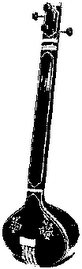
The three notes sa pa sa' that emerge like magic when I run my fingers on the strings of the thamboori.
What does it do?
Allows me to identify my inner self instantly, imbibes seriousness and devotion (bhakthi) towards an unknown power, calms me down immediately, makes me think, makes me feel positive, works like magic on me!
I am sure it happens to a lot of people who know music and who respect and love music. The power of music is amazing.
Thanks to my Amma for all her efforts and patience to identify my interest at an early age and giving me the love of my life, thanks to Meera aunty for her belief in me that I could sing, and all her support so far which I know for sure no other music teacher would have had putting up with all my tantrums, thanks to Paramasivam sir for those encouraging words when I used to learn from him, and thanks to Memoirs for re-loading the magic on me and for tolerating me always.
I hope I never let these people down ever.
What does it do?
Allows me to identify my inner self instantly, imbibes seriousness and devotion (bhakthi) towards an unknown power, calms me down immediately, makes me think, makes me feel positive, works like magic on me!
I am sure it happens to a lot of people who know music and who respect and love music. The power of music is amazing.
Thanks to my Amma for all her efforts and patience to identify my interest at an early age and giving me the love of my life, thanks to Meera aunty for her belief in me that I could sing, and all her support so far which I know for sure no other music teacher would have had putting up with all my tantrums, thanks to Paramasivam sir for those encouraging words when I used to learn from him, and thanks to Memoirs for re-loading the magic on me and for tolerating me always.
I hope I never let these people down ever.
Friday, March 30, 2007
Pancharathna Krithis
Singing pancharathna krithis for Thyagaraja Aradhane along with my music teacher felt great this year. This was on Jan 07, 2007. So I must say, 2007 KICK Started for me! Just felt like penning down some fond memories attached to each krithi that I have learnt :)
Endharomahaanu - This was the first pancharathna I learnt. I think I was 14 years then. Seeing the length of the song itself made me faint. However, those days my learning skills were very quick and I learnt it soon and when I sang in front of my relatives at home, they applauded me so much! I felt like one maha singer that time!
Dhudukugala - This is the second one, I found this a little tough although I picked up later and almost made me cry when I used to listen to meera aunty sing. O by the way, during the aradhane, they started of in such a low shruthi, 4.5 to be precise, that I picked higher octave and sang in contrast! :)
Jagadhanandha kaaraka - I took really long to write this down, college days your not used to writing too much, my speed reduced considerably! :) Not to forget the song in Anniyan - Iyengaaru veetu that picks after the first charanam! Incidentally, this happens to be the first song I sang in front of a student, who wanted to know how krithi is sung based on swaras.
Saadhinchane - I love the way Balamuruli has sung this. But this is such a lovely song, I used to always feel it is in Saama until I realized it is Aarabhi! :( Hope meera aunty is not reading my post! :) I used to practise late nights after work and trouble everyone at home singing the same few lines atleast 30 times till I got it right! :)
Kanakanaruchira - People have this belief that a teacher should not teach varaali to the student, either the student will stop learning or some hindrance will come up. Meera aunty never believed in that and taught me this one as well although I have not learnt this completely till date, I just know half half. :( Hope I complete this soon...does this mean, what people say is true? Will figure out soon!
Keep singing and keep enjoying music. Its worth anything and everything in life!
Happy weekend!
Endharomahaanu - This was the first pancharathna I learnt. I think I was 14 years then. Seeing the length of the song itself made me faint. However, those days my learning skills were very quick and I learnt it soon and when I sang in front of my relatives at home, they applauded me so much! I felt like one maha singer that time!
Dhudukugala - This is the second one, I found this a little tough although I picked up later and almost made me cry when I used to listen to meera aunty sing. O by the way, during the aradhane, they started of in such a low shruthi, 4.5 to be precise, that I picked higher octave and sang in contrast! :)
Jagadhanandha kaaraka - I took really long to write this down, college days your not used to writing too much, my speed reduced considerably! :) Not to forget the song in Anniyan - Iyengaaru veetu that picks after the first charanam! Incidentally, this happens to be the first song I sang in front of a student, who wanted to know how krithi is sung based on swaras.
Saadhinchane - I love the way Balamuruli has sung this. But this is such a lovely song, I used to always feel it is in Saama until I realized it is Aarabhi! :( Hope meera aunty is not reading my post! :) I used to practise late nights after work and trouble everyone at home singing the same few lines atleast 30 times till I got it right! :)
Kanakanaruchira - People have this belief that a teacher should not teach varaali to the student, either the student will stop learning or some hindrance will come up. Meera aunty never believed in that and taught me this one as well although I have not learnt this completely till date, I just know half half. :( Hope I complete this soon...does this mean, what people say is true? Will figure out soon!
Keep singing and keep enjoying music. Its worth anything and everything in life!
Happy weekend!
Thursday, March 22, 2007
On Rama Navami
The 9th day of Chaitra Maasa is Rama Navami, the birth of Lord Rama. The most auspicious day for Hindus. For us, we do pooja at home to Lord Rama and Seetha’s deities, read Sri Rama Sahasranama and go to temple and 99% attend a music concert in Rama Mandir. Mostly Meera Aunty’s concert or any carnatic concert. Not to forget paanaka, gulp down 3-4 glasses at a time! I love to sing Rama’s krithis and Devi’s krithis. While Rama’s krithis makes me fall in love with Rama, Devi’s krithis give me an unprecedented strength within. For Rama Navami, here’s the list of my known Rama’s songs learnt since childhood, been singing till now, and still love to sing:
1. Ramachandram Bhavayami – Raaga Vasantha
2. Raama Nee Samaanamevaru – Raaga Kharaharapriya
3. Maamava Pattabhirama – Raaga Manirangu
4. Ra Ra Rajeeva Lochana – Raaga Mohana
5. Brocheva – Raaga Khamach
6. Jesinadhella Marachitivo Raama – Raaga Thodi
7. Sri Rama Chandra Krupalu Bhajamana – Bhajan in Yaman
8. Deva Devam Bhaje – Devaranama in Hindolam
9. Raama Raama – Devaranama in Thillang
10. Seetha Kalyana – Suruti
11. Jagadhanandhakaraka – Pancharathna – Naata
12. Endharomahanubhavulu – Pancharathna – Shri
Not to forget:
13. Nepogadakunte - Shubhapanthuvaraali
14. Needhayaraadha - Vasantha bhairavi
15. Bantureethi kolu - Hamsanaadha
16. Khelathi mama hrudaye - Atthaana
17. Bhajare maanasa - Abheri
Should I include some fusions?
-> Mama Mama Shri Hari Rama? :) Tempting!!!
Well that’s for my Rama Navami to my Lord Rama. Will I be able to sing this year? Only Lord Rama knows. :)
Happy Rama Navami. God bless you.
Wednesday, July 05, 2006
There's something about Kalyani - definitely not the 'K' factor :)
A complete blend of raaga, thaala, shruthi, dhwani (voice), uchharane (pronunciation) and dhyaana (conciousness) results in good singing.
However, there are some raagas that give you the 'feel good' factor when you sing, of which one of my favorites is 'Kalyani'. Being a sampoorna raaga, it is a tough one to sing. But the way swara combinations can be made in this raaga, is simply superb. The swara sthaanas are such that it allows you to express emotions in rendering the raaga. While music itself is a way of expression, Kalyani is very close to my heart.
Being a core carnatic music lover, this is just to share one of my experiences.
Check out more information on Kalyani - Ilayaraja - Tamil Songs - Raaga usage at:
http://hawkeyeview.blogspot.com/2004/06/ilayaraja-and-kunnakudi-vaidhyanathan.html
by another fan of kalyani...:-)
However, there are some raagas that give you the 'feel good' factor when you sing, of which one of my favorites is 'Kalyani'. Being a sampoorna raaga, it is a tough one to sing. But the way swara combinations can be made in this raaga, is simply superb. The swara sthaanas are such that it allows you to express emotions in rendering the raaga. While music itself is a way of expression, Kalyani is very close to my heart.
Being a core carnatic music lover, this is just to share one of my experiences.
Check out more information on Kalyani - Ilayaraja - Tamil Songs - Raaga usage at:
http://hawkeyeview.blogspot.com/2004/06/ilayaraja-and-kunnakudi-vaidhyanathan.html
by another fan of kalyani...:-)
Subscribe to:
Posts (Atom)